LMS
LMS
Last updated on 19th May 2026| 4585

- Introduction to Gen AI Engineer Internship Tutorial
- Role of a Gen AI Engineer
- Foundations of AI & ML
- Neural Networks Basics
- Generative Models Overview
- Hands‑On with GANs and VAEs
- Transformers and LLMs
- Real‑World Use Cases
- Tools, Platforms, and Frameworks
- Internship
Introduction to Gen AI Engineer Internship Tutorial
Gen AI Engineer Internship Tutorial is a transformative branch of artificial intelligence that focuses on creating new content such as text, images, audio, and even code. Unlike predictive AI, which classifies or forecasts, generative models learn the underlying distribution of data and generate outputs that mimic human creativity. They rely on deep learning architectures, particularly neural networks, to capture complex relationships in datasets. For freshers, the excitement lies in seeing machines generate essays, artwork, or music that feels authentic in Gen AI Course. Generative AI has become mainstream with models like GPT for text and diffusion models for images. It is widely applied in industries from healthcare to entertainment, automating tasks and sparking innovation. The technology is event-driven, responding to prompts or inputs to produce dynamic results. Its structured programming concepts make it approachable for learners. Generative AI is not just technical but also philosophical, raising questions about originality and ethics. Learning it provides a gateway into modern AI careers.
Role of a Gen AI Engineer
- Core Responsibilities: Gen AI engineers design, train, and deploy generative models. They ensure models produce accurate and creative outputs. Responsibilities include data preparation and model evaluation. Engineers also integrate AI into real-world applications. Their role bridges research and practical implementation. Freshers must understand these tasks clearly.
- Collaboration: Engineers work with data scientists and developers. Collaboration ensures models meet business needs. Teams share insights across domains. Communication skills are vital for success. Freshers should practice teamwork early. Collaboration builds professional growth.
- Innovation: Engineers explore new architectures like GANs and transformers. They experiment with cutting-edge techniques and Gen AI Engineer Internship Tutorial For Freshers. Innovation drives AI forward. Creativity is as important as coding. Freshers should cultivate curiosity. Innovation ensures career advancement.
- Problem-Solving: Engineers tackle challenges like bias and scalability. They design solutions for ethical AI. Problem-solving requires analytical thinking. Freshers must practice critical reasoning. This skill improves project outcomes. It builds confidence in real scenarios.
- Career Path: Entry roles include AI intern or junior engineer. Progression leads to ML engineer or researcher. Specialization in NLP or vision is possible. Career growth depends on skills and projects. Freshers should plan long-term goals. The path is diverse and rewarding.
Get Your Gen AI Certification by Learning from Industry-Leading Experts and Advancing Your Career with ACTE’s Gen AI Course.
Foundations of AI & ML
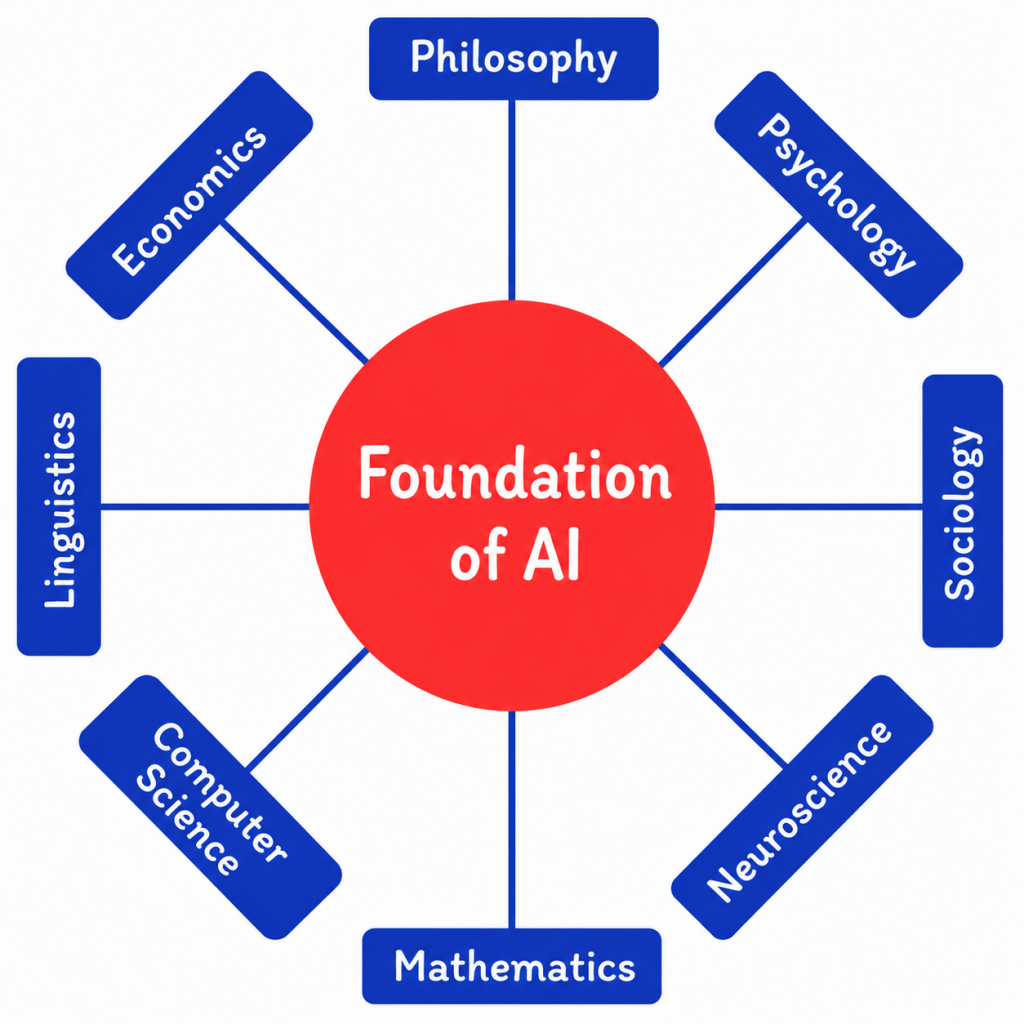
Artificial Intelligence and Machine Learning form the foundation of generative AI. AI is the science of building machines that simulate human intelligence, while ML focuses on algorithms that learn from data. Freshers must understand supervised, unsupervised, and reinforcement learning methods. These approaches allow machines to recognize patterns, make decisions, and improve over time. Foundational knowledge also includes probability, statistics, and linear algebra. Without these basics, advanced topics like generative models become difficult to grasp in Gen AI Course. AI has evolved from rule-based systems to deep learning architectures. Today, it powers search engines, recommendation systems, and autonomous vehicles. Building a strong foundation ensures learners can adapt to new AI technologies. It also prepares them for practical projects and internships. This section sets the stage for deeper exploration of neural networks and generative models.
Neural Networks Basics
- Structure: Input layer receives raw data. Hidden layers transform data through weights. Output layer produces predictions. Connections are adjusted during training. This structure mimics the human brain. Freshers must grasp this design.
- Training: Backpropagation updates weights based on errors. Gradient descent minimizes loss functions and Claude Tutorial for Beginners: Learn with Real Use Cases. Activation functions add complexity. Regularization prevents overfitting. Training ensures accurate models. Beginners should practice coding examples.
- Activation Functions: ReLU introduces non-linearity. Sigmoid maps values between 0 and 1. Tanh balances outputs around zero. Functions enable complex learning. Freshers must compare their effects. This builds deeper understanding.
- Challenges: Overfitting reduces generalization. Underfitting misses patterns. Vanishing gradients hinder training. Solutions include dropout and normalization. Challenges teach resilience. Freshers must learn mitigation.
- Applications: Neural networks power image recognition. They drive text generation. Speech recognition relies on them. Robotics uses neural control. Applications show versatility. Freshers gain motivation.

Generative Models Overview
Generative models are designed to learn data distributions and generate new samples. Unlike discriminative models, which classify inputs, generative models create outputs. They capture latent variables that represent hidden structures in data. Examples include Variational Autoencoders (VAEs), Generative Adversarial Networks (GANs), and diffusion models. For freshers, the key idea is that generative models can produce realistic data resembling training sets in Google Gemini Tutorial for Beginners A Complete Introduction. They are used in text generation, image synthesis, and even drug discovery. Generative models rely on probabilistic approaches and deep learning. They often balance creativity with constraints to ensure outputs are meaningful. Understanding them requires knowledge of probability distributions and optimization. These models are central to modern AI applications. They also raise ethical questions about originality and authenticity. This overview prepares learners for deeper dives into GANs, VAEs, and transformers.

Get JOB Oriented Gen AI Training for Beginners By MNC Experts
- Instructor-led Sessions
- Real-life Case Studies
- Assignments
Hands‑On with GANs and VAEs
- GANs: Generator creates synthetic data. Discriminator evaluates authenticity. Training improves realism. Used in image synthesis. GANs highlight adversarial learning. Freshers must practice coding them.
- VAEs: Encoder maps data to latent space. Decoder reconstructs outputs. Balances accuracy and regularization. Useful for structured generation. VAEs emphasize probabilistic modeling. Beginners should explore examples.
- Challenges: GANs face mode collapse. VAEs produce blurry outputs. Training requires balance. Computational costs are high. Challenges teach resilience. Freshers must learn solutions.
- Applications: GANs generate realistic art. VAEs support data compression. Both aid synthetic datasets. Used in entertainment and science. Applications inspire creativity. Freshers gain exposure and ;earn more in Generative AI Step-by-Step Tutorial for Beginners.
- Learning Path: Start with tutorials. Build small projects. Experiment with datasets. Compare outputs. Document findings. Freshers gain confidence.
Want to Master Gen AI? Explore the Gen AI Master Program Offered at ACTE Today!
Transformers and LLMs
Transformers revolutionized AI by enabling models to handle sequential data efficiently. They rely on self-attention mechanisms, which weigh relationships between tokens. Unlike RNNs, transformers process sequences in parallel, improving scalability and Complete Generative AI Basics to Advanced Tutorial . The architecture includes encoder and decoder blocks with multi-head attention.
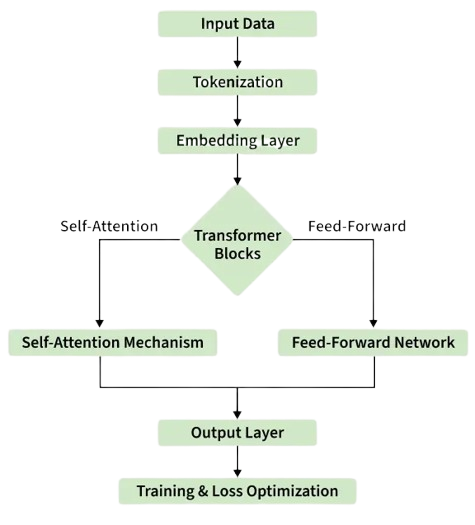
Transformers power models like GPT, BERT, and T5. For freshers, understanding attention is key: it allows models to focus on relevant parts of input. Positional encoding ensures sequence order is preserved. Transformers excel in natural language processing tasks like translation, summarization, and question answering in our Gen AI Course. They also extend to multimodal applications combining text and images. Training transformers requires large datasets and computational resources. Despite complexity, they are the backbone of modern generative AI. Learning transformers opens doors to cutting-edge research and applications. They represent the state of the art in AI.
Want to Learn About DevOps? Explore Our DevOps Interview Questions and Answers Featuring the Most Frequently Asked Questions in Job Interviews.
Real‑World Use Cases
- Healthcare: AI generates synthetic medical data, supports drug discovery, assists in diagnostics, and enhances patient care. Healthcare shows AI’s impact, motivating freshers with meaningful applications.
- Finance: AI detects fraud, generates synthetic transactions, improves risk analysis, and automates reporting. Finance benefits greatly, helping beginners see real-world relevance.
- Education: AI creates tutoring systems, generates personalized content, supports adaptive learning, and enhances accessibility. Education inspires projects and gives freshers valuable exposure.
- Entertainment: AI powers creative applications such as art generation, gaming environments, and media production. These use cases highlight innovation and inspire learners to explore artistic AI possibilities and learn more in Artificial Neural Network A Complete Guide Tutorial
- Business: AI automates marketing visuals, improves customer engagement, and supports design automation. Businesses benefit from productivity gains, showing freshers how AI transforms industries.
Tools, Platforms, and Frameworks
- TensorFlow: An open-source deep learning framework developed by Google. Widely used for building machine learning and AI applications, supporting scalable model training for beginners and professionals.
- PyTorch: A popular AI framework used in research and development. It provides flexibility and easy debugging, making it ideal for computer vision and generative AI projects.
- Hugging Face: Offers pre-trained transformer models and NLP tools. Developers use it for chatbots, summarization, and text generation. Beginner-friendly and widely adopted in modern AI development.and learn more in Generative AI Tutorial for Beginners Introduction and Basics
- Google Colab: A cloud-based platform for coding and AI experimentation. It allows users to run Python notebooks without local installations and provides free GPU support for faster training.
- OpenAI Tools: Includes advanced AI systems such as ChatGPT and image generators. These tools support content generation, automation, and coding assistance, widely used in education, marketing, and software industries.
Internship
A Gen AI Engineer Internship Tutorial provides practical experience in working with AI tools, machine learning models, and real-world projects. It helps students and beginners apply theoretical knowledge to industry applications. Internships improve technical skills, problem-solving abilities in our Gen AI Course, and understanding of AI workflows. Companies often provide exposure to data analysis, neural networks, NLP, and AI model training during internships. Learners gain hands-on experience with tools like TensorFlow and PyTorch, strengthening their understanding of machine learning concepts. Internships also improve teamwork and project management abilities, preparing freshers for professional careers in AI. Practical exposure builds confidence and bridges the gap between academic learning and industry requirements.